
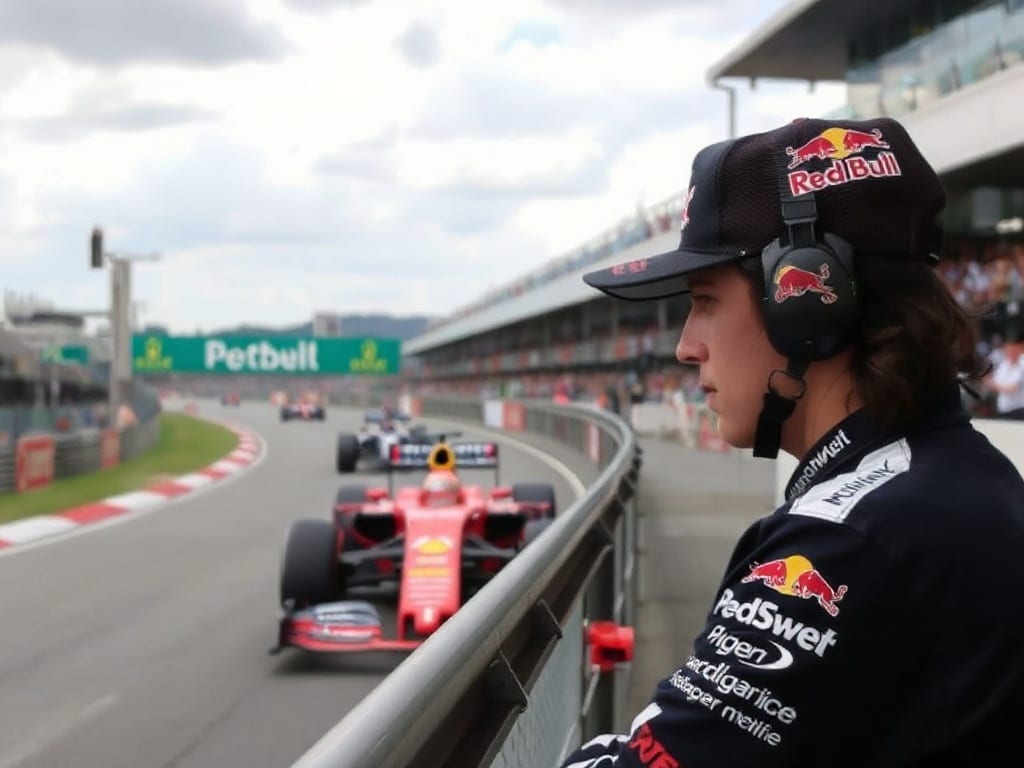
How I Started Betting on Formula 1 in Texas and What I Learned the Hard Way
The first bet I ever placed on Formula 1 was wrong in almost every way a bet can be wrong. Wrong driver, wrong race, wrong reasoning. I put $40 on a podium finish for a mid-grid car at the 2022 Miami Grand Prix because I liked the team colors. That tells you everything about where I started.
If you're in Texas and you've been watching F1 grow from a niche European obsession into something your coworkers actually talk about, you've probably felt the pull. Sports betting went legal here in a complicated, patchwork kind of way, and the apps are right there on your phone. This piece covers how I started betting on Formula 1 in Texas, what actually works, and where I burned money figuring it out.
Texas Sports Betting Is a Strange Landscape
Let's get the legal stuff out of the way fast, because it matters. Texas has not passed full retail or mobile sports betting legislation as of mid-2025. That puts it behind states like Colorado, New Jersey, and even neighboring Louisiana and Arizona. What Texans actually use are offshore sportsbooks and, increasingly, daily fantasy platforms that sit in a legal gray zone.
I used Bovada and BetOnline for most of my early F1 bets. Both are offshore, both accept Texas players, and both have solid F1 markets. I'm not going to pretend there's zero risk to offshore books—there is—but millions of Texans use them every week and withdrawals have worked for me without issues. DraftKings and FanDuel do operate in Texas through fantasy contests, but their F1 offerings are thin compared to their NFL products.
The practical reality is that if you want deep F1 markets—fastest lap, constructor head-to-heads, qualifying matchups—offshore is where you'll find them. That's just where things stand right now in this state.
Why F1 Betting Is Nothing Like Betting on Football
I came from a background of casual NFL betting. A team wins or loses, you pick a spread, life is simple. Formula 1 broke that mental model almost immediately. Twenty drivers, ten teams, a race that can last two hours and get turned upside down by a safety car in lap 43—it's a completely different animal.
The first thing that tripped me up was assuming the favorite always wins. In F1, the race favorite often does win, which sounds like good news until you see the odds. Max Verstappen at peak Red Bull dominance was regularly priced around -400 to -600 to win a given race. You'd need to bet $500 just to profit $100. That's not a good deal for most recreational bettors. The favorites are priced efficiently because the public knows the sport now.
Where the value actually lives is in prop bets and alternative markets. Podium finishes, points finishes, head-to-head driver matchups, and fastest lap bets all carry more variance and, sometimes, more mispriced lines. I learned this slowly and expensively. A good reference point when I was figuring this out was reading up on best betting on Formula 1 strategies—it gave me a framework I wish I'd had from the start.
The Specific Mistakes I Made (So You Don't Have To)
Mistake one was betting race winners every single race without considering the circuit. Not all tracks favor the same teams. Street circuits like Monaco and Baku heavily reward certain chassis characteristics. Power tracks like Monza open up the field differently. I was treating every race like a coin flip between the top three drivers without thinking about context.
Mistake two was ignoring practice session timing and data. F1 broadcasts so much information about car setup, tyre wear, and pace data during Friday practice sessions that it's almost irresponsible not to use it before locking in a bet. I'd place my bets Thursday night based on nothing but gut feeling, then watch Friday practice reveal a completely different picture. Qualifying on Saturday reshuffles things further. The timing of when you place your bet genuinely matters.
Mistake three, and honestly the most expensive one: I didn't shop lines across books. Bovada and BetOnline rarely have identical odds. A driver might be +280 on one book and +240 on the other. Over a full season of 24 races, that difference compounds into real money. Checking two or three books takes four minutes. I just didn't bother early on.
What a Typical Race Weekend Looks Like for Me Now
I've built a routine that's low-stress and keeps me from making impulsive bets on incomplete information. It runs roughly like this across the race weekend:
- Thursday: Review team press conferences and any setup notes. Flag interesting head-to-head matchups to watch.
- Friday after FP2: Check pace data. Look at long-run times specifically—that predicts race pace better than one-lap speed. Start narrowing potential bets but don't place anything yet.
- Saturday after qualifying: Grid positions are set. Now I bet. Starting position is one of the strongest predictors of race outcome, especially at tracks with limited overtaking.
- Race day: I almost never bet live in-race. The odds move too fast and I'm trying to watch the race, not stare at a sportsbook app.
This process has genuinely reduced my losing percentage. Not eliminated it—F1 has produced enough rain delays, red flags, and mechanical failures to humble every betting system ever devised—but reduced it meaningfully.
Which Bet Types Actually Have Value in F1
The outright race winner market is the most popular and usually the least value for a casual bettor. Here's a rough breakdown of where I've found different markets to land:
| Bet Type | Value Potential | Difficulty |
|---|---|---|
| Race winner | Low (favorites overpriced) | Low |
| Podium finish | Medium | Low-Medium |
| Driver head-to-head | Medium-High | Medium |
| Points finish (top 10) | Medium | Low |
| Fastest lap | High (volatile) | High |
| Constructor winner | Medium | Medium |
Driver head-to-heads are where I've had the most consistent success. You're essentially picking which of two drivers finishes ahead of the other, regardless of overall race result. It narrows the complexity dramatically. If you know one driver is historically strong at a specific circuit type, or one is coming off a car upgrade while their teammate isn't, that edge shows up clearly in this market.
The Austin Connection: Why Texas F1 Fans Are Different
The United States Grand Prix at Circuit of the Americas (COTA) in Austin has done something interesting to Texas F1 culture. It's not just a race; it's a week-long event that draws fans who'd never watched a full race on television. I've talked to people in the COTA infield who placed their first sports bet ever on that race weekend, purely because the energy made it feel like something you had to participate in.
That's a sharp contrast with how people approach betting in other contexts. NFL bettors in Texas have usually watched hundreds of games before they ever touch a sportsbook app. F1 bettors at COTA are sometimes two episodes into Drive to Survive and ready to drop $100 on Charles Leclerc. That's exactly where I was, and it cost me a couple of hundred dollars of tuition before I slowed down.
The COTA race also affects the odds market in a specific way. American public money floods into F1 markets that week, and sportsbooks know it. The lines on the US Grand Prix often reflect recreational American sentiment more than actual probability—which means sharper bettors can sometimes find real value going against the grain on that particular race.
Bankroll Management Is Boring and Necessary
Nobody wants to read about bankroll management. I get it. But I blew through $300 in my first six weeks of F1 betting because I had no structure. Three hundred dollars isn't a crisis, but it wasn't supposed to be a sunk cost either.
What I do now is simple: I treat my F1 betting bankroll separately from everything else. It lives in a specific account, currently around $500, and I never bet more than 3% of it on a single race. That's $15 a bet at the current level. It sounds small, and it is. But it means a bad run of luck—which F1 absolutely delivers regularly—doesn't end the season early.
The other rule I've set for myself: no chasing losses. If I lose three races in a row, I don't double up on race four. That's the move that turns a bad month into an actually bad situation.
A Counterpoint Worth Taking Seriously
There's a version of this conversation where the honest answer is: sports betting is designed for the house to win, F1 included, and most people who bet consistently lose money over time. That's true. The margins are real. Offshore books build in their edge just like Vegas does.
If your goal is profit over the long term, you need either a genuine edge (significant research time, access to sharp data) or very good discipline around line shopping and bet selection. Most casual bettors, myself included, probably don't have that level of edge. What I do have is a better time watching races because I've got something at stake, and I keep my losses small enough that it functions more like a premium cable subscription than a financial strategy. That's an honest way to frame it.
FAQ: Formula 1 Betting in Texas
Is it legal to bet on Formula 1 in Texas?
Texas hasn't legalized full mobile sports betting as of 2025. Most Texans who bet on F1 use offshore sportsbooks like Bovada or BetOnline, which accept Texas customers. These operate in a legal gray area. Daily fantasy platforms like DraftKings are available in Texas but offer limited F1 markets.
Which sportsbooks are best for F1 betting in the US?
For Texans, Bovada and BetOnline are the most popular offshore options with solid F1 market depth. In states where it's legal, DraftKings, FanDuel, and Caesars all carry F1 markets, though their lines can be shallower than offshore alternatives for props and alternate bets.
What's the easiest F1 bet for a beginner?
Podium finish bets and driver head-to-head matchups are the most approachable for beginners. They're simpler to analyze than outright race winners and often offer better value than betting on the race favorite at compressed odds.
How does the COTA race affect F1 betting lines?
The US Grand Prix at Circuit of the Americas draws heavy American recreational money, which can move lines away from their true probability. Books account for this, but sharp bettors sometimes find value by fading public sentiment on that specific race weekend.
When is the best time to place an F1 bet?
After qualifying on Saturday is generally the optimal window. Grid positions are set, the teams have shown their pace across the full weekend, and you have the most information available before the race. Pre-race odds on Sunday morning may shift further, but the qualifying result is usually the most predictive single factor available to you.
